How I Clean Hardwood Floors as a Professional Cleaner
Hardwood floors don’t need a complicated cleaning routine.
In fact, after cleaning professionally for years, I’ve found that some of the best results come from keeping things pretty simple: remove the dirt, use a small amount of cleaning solution, control the moisture, and use a clean mop.
That doesn’t mean every wood floor gets treated exactly the same way. The age, type of wood, finish, and condition of the floor all matter.
A quick note before we get started: Always follow the care and cleaning recommendations provided by the manufacturer of your specific flooring and finish. Wood floors can vary considerably, and my method below is simply the approach I use in my professional cleaning work. When in doubt, check with the flooring manufacturer or a qualified flooring professional.
With that said, here’s how I approach cleaning hardwood floors for my clients.
And there are a couple of things I see people do with hardwood floors that I personally avoid—especially steam cleaning.
First: Remove the Dirt
Before I wet-clean a hardwood floor, I want to get as much loose dirt, dust, hair, and grit off the floor as possible.
Usually, I’ll vacuum.
But sometimes I don’t.
I’ve cleaned homes with softer wood floors, including pine, where I’m more cautious about using a vacuum. In those situations, I may use a dry microfiber dust mop instead.
The goal is simply to remove the loose debris before I introduce any moisture.
This is an important step because you don’t want to turn loose dirt into muddy cleaning solution and push it around with your mop.
My Simple Hardwood Floor Cleaning Method
Once the loose dirt is removed, I work in small sections rather than spraying the entire floor at once.
I use a small pump sprayer filled with warm water and a very small amount of Sal Suds. I don’t obsess over measuring it to the exact drop when I’m working, but it’s approximately ½ teaspoon in my 48-ounce sprayer.
I lightly spray a section of floor—usually around 5 feet by 5 feet—and then mop that section before moving on to the next one.
The important part is lightly.
Hardwood floors don’t need to be soaked.
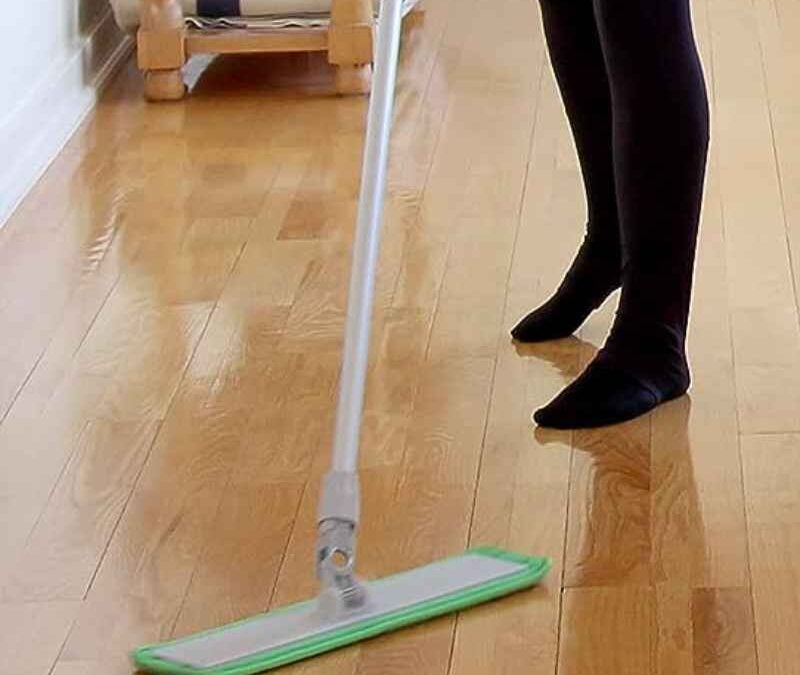
I mop with the grain of the wood, working the cleaning solution across the floor and picking up the dirt as I go. I don’t want puddles of water sitting on the floor, and I don’t want to leave the floor unnecessarily wet.
Dr. Bronner’s current Sal Suds guidance also emphasizes using diluted Sal Suds on wood floors and avoiding excess water on wood and laminate.
I Change My Mop Pad
This is one of those little things that makes a big difference when you’re cleaning professionally.
I change my microfiber mop pad between rooms.
If I’m cleaning a particularly large room or a room that has a lot of traffic—like a kitchen or dining room—I may need to change the pad again or make a second pass.
There’s no point in using a dirty mop pad to move dirt from one part of the floor to another.
If the floor needs another pass, I would rather use a clean pad and give it another light cleaning.
Why I Like a Pump Sprayer
A pump sprayer might seem like an unusual piece of cleaning equipment for hardwood floors, but I love it because it gives me control.
Instead of filling a bucket with cleaning solution and dipping a mop into it over and over, I can apply a small amount of solution exactly where I need it.
That makes it easier to work in sections and, most importantly, helps me avoid putting too much water on the floor.
For me, hardwood floor cleaning isn’t about getting the floor soaking wet.
It’s about getting it clean with as little moisture as necessary.
What About Murphy’s, Bona and Wet Swiffer Products?
This is where I want to make an important distinction.
I’m not going to tell you that every hardwood-floor product on the market is “bad.” Different products are designed for different finishes, and your flooring manufacturer’s recommendations should always come first.
But after cleaning floors professionally, I’ve seen plenty of floors that have a history of using different cleaning and floor-care products.
Sometimes the floor doesn’t just have dirt on it.
It has product buildup.
If products have been used repeatedly over a long period of time—particularly products that leave a film or are designed to add shine or another layer to the floor—you may eventually end up with a floor that looks hazy or dull or feels like it has a film on it.
And this is where people sometimes get frustrated.
They clean the floor again and again, but it still doesn’t look or feel clean.
That’s because they’re trying to clean through a buildup problem.
I’m not saying that every bottle of Murphy’s, Bona, or every wet floor-cleaning product will cause buildup on every floor. What I’m saying is that I’ve encountered hardwood floors where years of product use have left behind a noticeable film or haze, and routine cleaning alone isn’t going to solve that problem.
What do I do if I encounter buildup?
I don’t try to aggressively strip a hardwood floor myself.
There are too many variables: the type of wood, the finish, the age of the floor, what products have been used, and what condition the finish is in.
If I encounter significant buildup, I would recommend having a flooring professional evaluate the floor and determine the appropriate way to address it.
That’s different from routine cleaning.
Routine cleaning is about maintaining the floor. Floor restoration is a different job.
Please Don’t Steam Clean Your Hardwood Floors
This is probably the biggest piece of advice I have for you.
I don’t use a steam cleaner on hardwood floors.
I know steam cleaners are frequently advertised as being safe for sealed hardwood floors.
I still don’t use them.
I’ve seen hardwood floors that have been damaged after people repeatedly used steam cleaners, and I don’t think the convenience is worth the risk.
A sealed floor is not the same thing as a floor that is completely impervious to moisture.
The National Wood Flooring Association specifically advises against using steam cleaners on wood floors because steam and moisture can penetrate the flooring and cause damage to the wood and finish.
So if you’re looking at a steam mop because the advertisement says it’s safe for sealed hardwood, my advice is simple:
Skip it.
There are much less aggressive ways to clean a wood floor.
My Three Hardwood Floor Cleaning Essentials
You really don’t need a cabinet full of products to clean a hardwood floor.
The basic setup I use is very simple:
1. A good microfiber mop
I use a Turbo Mop because I like having a lightweight mop that allows me to control how I’m cleaning the floor.
2. A pump sprayer
A pump sprayer lets me apply a small amount of cleaning solution to a manageable section of flooring instead of saturating the entire floor.
3. Sal Suds
I use a very small amount of Sal Suds diluted with warm water for my cleaning solution. Sal Suds is a concentrated cleaner, so always follow the manufacturer’s dilution and care instructions.
As an Amazon Associate I earn from qualifying purchases.
I’ve put together the few products I actually use and recommend for my simple hardwood floor cleaning routine.
Hardwood Floor Cleaning Essentials
One Last Thing: Know What Kind of Floor You’re Cleaning
If there’s one thing I hope you take away from this, it’s that hardwood floors aren’t all exactly the same.
A beautiful old pine floor may need a different approach than a newer, heavily finished hardwood floor.
A floor that’s been properly maintained for years is different from one that’s covered in years of product buildup.
And a floor that simply needs routine cleaning is very different from a floor that needs restoration.
That’s why I don’t believe in complicated cleaning routines that tell everyone to do exactly the same thing.
Look at the floor in front of you.
Remove the loose dirt.
Use as little moisture as you reasonably can.
Clean in manageable sections.
Use a clean mop pad.
And if the floor has a problem that routine cleaning isn’t fixing, don’t keep throwing more cleaning products at it.
Sometimes the best thing you can do for a hardwood floor is stop trying to clean it harder and have a flooring professional take a look.
As an Amazon Associate I earn from qualifying purchases.
