The Magical Marvels of Frankincense Resin: History, Traditional Uses, Benefits & DIY Recipes
Frankincense is one of those botanical treasures that seems to connect the ancient world with our modern lives. Its warm, woody, balsamic aroma has been treasured for thousands of years, appearing in religious ceremonies, spiritual practices, traditional preparations, perfumes, and skincare products.
But frankincense is more than a beautiful scent. This fragrant resin comes from trees in the Boswellia genus, and it has a fascinating history that spans cultures, continents, and generations. Today, it continues to attract interest from aromatherapy enthusiasts, natural skincare lovers, and people looking for meaningful ways to incorporate botanical ingredients into everyday rituals.
If you’ve only experienced frankincense as an essential oil, you’re in for a treat. The raw resin offers a different experience, whether you’re using it as incense, exploring traditional preparations, or making your own botanical creations.
Let’s explore what frankincense resin is, why it has been treasured throughout history, what modern research tells us about its properties, and how you can use it in your own DIY projects.
What Is Frankincense Resin?
Frankincense is a fragrant, natural gum resin harvested from trees belonging to the Boswellia genus. These trees grow in parts of Africa, the Arabian Peninsula, and India, often in dry, rugged environments.
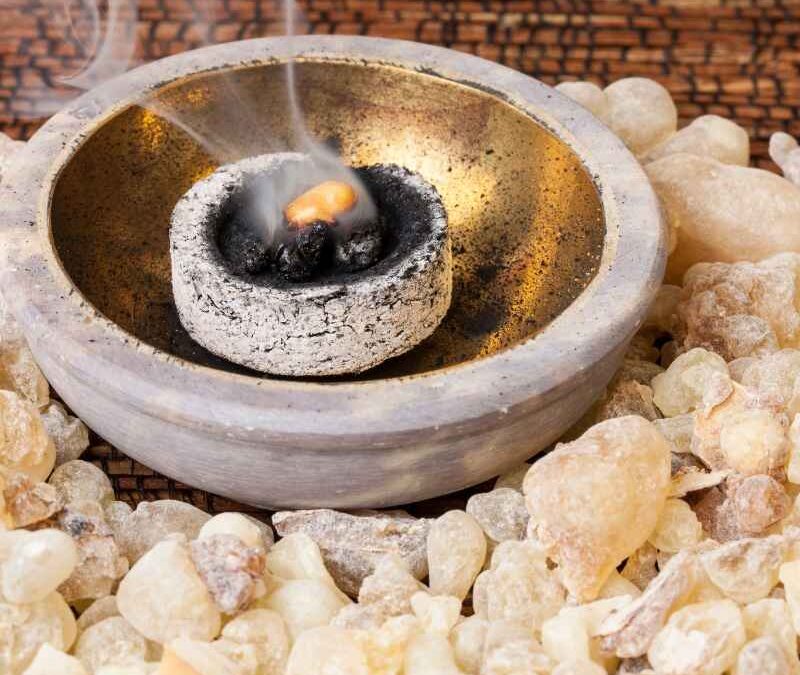
When the bark is carefully cut, the tree releases a milky sap that hardens into aromatic tears or irregular chunks. These hardened pieces are collected, sorted, and used for incense, traditional preparations, and the production of frankincense essential oil.
The resin contains a complex mixture of natural compounds, including aromatic components and boswellic acids. Its exact composition varies according to the Boswellia species, growing conditions, and other factors.
Frankincense resin and frankincense essential oil are related, but they are not interchangeable. The resin is the original botanical material, while the essential oil is produced through distillation and contains a different selection of the resin’s volatile aromatic compounds.
Different Types of Frankincense
There are several Boswellia species used to produce frankincense. Three commonly discussed types are:
- Boswellia carterii: Associated with the frankincense trade in parts of the Horn of Africa, including Somaliland. It has a warm, balsamic, woody aroma and is widely used in incense and aromatherapy products.
- Boswellia sacra: Best known from Oman and parts of the southern Arabian Peninsula. It has a long history of cultural and commercial importance and is especially associated with the celebrated frankincense-producing regions of Arabia.
- Boswellia serrata: Native to India and used extensively in traditional Ayurvedic preparations. It is particularly prominent in modern research on boswellic acids and their potential biological activities.
These species have overlapping uses, but they are not identical. Their aromas, chemical profiles, and traditional applications can differ.
If you’re interested in working with frankincense resin, look for a reputable supplier that identifies the botanical species and provides clear product information.
Where to find frankincense resin
I recommend exploring the frankincense resin from Aromatics International. This product is identified as Boswellia carterii resin and is suitable to consider for projects involving raw frankincense, such as incense and resin infusions. Always check the supplier’s current instructions and intended uses before beginning a project.
Disclosure: This article contains affiliate links. If you purchase through a qualifying link, I may earn a commission at no additional cost to you.
The Fascinating History of Frankincense
Frankincense has been valued for thousands of years. Its fragrance made it a treasured trade commodity, and its use in ceremonies, traditional preparations, and perfumery helped establish its place in many ancient cultures.
The resin was transported along historic trade routes linking frankincense-producing regions with markets in the Mediterranean, North Africa, and Asia. It was valuable enough to become an important part of regional commerce, and the communities that harvested and traded it played a significant role in this history.
Frankincense wasn’t simply an ingredient. Its distinctive fragrance became associated with reverence, celebration, purification, and the sacred.
Frankincense in the Bible
Many readers recognize frankincense from the biblical account of the Magi visiting the infant Jesus. In the Gospel of Matthew, the visitors present three gifts: gold, frankincense, and myrrh.
These gifts have inspired centuries of religious interpretation. Frankincense, with its association with worship and sacred offerings, has often been understood as a symbol of honor, reverence, or divinity.
Frankincense also has a broader history in religious traditions beyond this biblical account. Aromatic resins and incense have been used in worship and ceremonial settings across different cultures for generations.
Its enduring presence in religious history helps explain why frankincense continues to hold such significance for people who use it in prayer, contemplation, and personal spiritual practices.
Frankincense in Religious and Spiritual Practices
Burning frankincense creates a fragrant, atmospheric experience that can make an ordinary space feel more intentional. Historically, the smoke and aroma of incense have been associated with offerings, purification, prayer, and sacred ceremonies.
Different traditions have their own beliefs and practices surrounding incense. For some people, frankincense is part of a religious observance. For others, it is a way to mark a quiet moment, create a peaceful atmosphere, or establish a familiar ritual.
You don’t need to follow a particular spiritual tradition to appreciate the resin’s history or fragrance. You might choose to burn a small amount while journaling, meditating, praying, or simply taking a break from a busy day.
For me, one of the most interesting things about frankincense is how a natural material can carry so much cultural meaning while still being appreciated for something as simple as its scent.
Traditional Medicinal Uses and Modern Research
Frankincense has a long history of use in traditional systems of medicine. Different Boswellia preparations have been used for a range of purposes, including addressing discomfort and inflammation.
Modern researchers have taken an interest in frankincense because it contains compounds that may influence biological processes. Boswellic acids, in particular, have been studied for their potential anti-inflammatory activity.
It is important, however, to distinguish between traditional use, laboratory research, and evidence from clinical studies in people. These are different types of evidence, and one does not automatically prove the others.
The U.S. National Center for Complementary and Integrative Health notes that some studies of orally taken Boswelliaextracts suggest possible benefits for osteoarthritis-related pain and inflammation. However, the overall evidence remains limited, and more rigorous research is needed. Evidence for topical frankincense preparations is also insufficient to establish them as effective treatments for medical conditions.
You can read more in the NCCIH overview of Boswellia.
What About Anti-Inflammatory and Other Properties?
Research into Boswellia has explored its anti-inflammatory properties and the biological activities of compounds found in the resin. Scientists have also investigated other potential applications, but promising laboratory findings should not be confused with proven health benefits in humans.
Frankincense products also vary considerably. Raw resin, essential oil, and concentrated extracts contain different constituents and are prepared and used differently. Results from a study of a standardized oral extract cannot automatically be applied to burning resin or using a homemade infused oil.
This doesn’t make the traditional history any less interesting. It simply gives us a more accurate picture of what we know and what researchers are still investigating.
Frankincense is best appreciated as a botanical material with a rich traditional history and an intriguing area of ongoing research—not as a replacement for medical care or a guaranteed treatment.
Frankincense in Skincare and Beauty
Frankincense has also found its way into modern skincare products, facial oils, balms, perfumes, and other personal-care preparations.
Its resinous, warm aroma makes it an appealing ingredient in natural perfumery. Frankincense-derived ingredients also appear in some beauty products marketed for mature or dry skin.
Why the interest? Frankincense contains a variety of natural compounds, and some have been investigated for their biological properties. However, evidence for specific cosmetic benefits depends on the ingredient, formulation, and intended use. Claims that frankincense will erase wrinkles, remove scars, or treat skin conditions go beyond what the available evidence establishes.
If you enjoy making your own skincare preparations, a properly prepared resin-infused oil can be an interesting ingredient to experiment with.
A simple oil-based preparation may be used as an ingredient in a homemade body oil or balm, provided the finished product is suitable for your skin and you follow appropriate hygiene and storage practices.
A note about sensitive skin: Always patch-test a new preparation on a small area of skin first. Avoid applying homemade preparations to broken or irritated skin, and don’t assume that a natural ingredient is automatically non-irritating. If you have a persistent skin condition, consult a qualified healthcare professional rather than relying on a DIY product.
Frankincense Resin vs. Frankincense Essential Oil
Both forms come from the same botanical source, but they offer different ways to experience frankincense.
Frankincense resin
- The original hardened gum resin collected from Boswellia trees.
- Can be used as incense with suitable equipment.
- Can be incorporated into certain traditional or DIY preparations.
- Offers a hands-on experience with the raw botanical material.
Frankincense essential oil
- Produced by distilling aromatic constituents from the resin.
- Convenient for properly formulated aromatherapy blends and perfumes.
- Highly concentrated and should be diluted appropriately for topical use.
- Offers a different aromatic profile from burning the raw resin.
Neither form is universally better. It depends on what you’re making and how you want to use frankincense.
If you want to explore the resin itself, start with a clearly identified product such as Aromatics International’s frankincense resin.
DIY Frankincense Resin Recipes
One of the best things about frankincense resin is the variety of ways you can explore it. The following projects range from a simple aromatic ritual to traditional-style DIY preparations.
Before starting, remember that raw resin does not dissolve completely in carrier oil or water. Infused oils need to be strained, and homemade preparations should not be assumed to be sterile or shelf-stable.
1. Frankincense-Infused Oil
A resin-infused oil is a useful starting point if you want to experiment with frankincense in oil-based preparations.
Ingredients
- 1/4 cup frankincense resin
- 1/2 cup carrier oil, such as jojoba, sweet almond, or olive oil
- A clean, completely dry glass jar with a lid
- Fine mesh strainer
Instructions
- Place the resin in a clean mortar and pestle or a sturdy bag and gently crush it into smaller pieces. Avoid making unnecessary fine dust.
- Add the crushed resin to your clean, dry jar.
- Pour the carrier oil over the resin, making sure the material is covered.
- Close the jar and place it in a warm location away from excessive heat and direct sunlight. If using a sunny windowsill, monitor the temperature and avoid overheating the oil.
- Allow the mixture to infuse for approximately four to six weeks, gently swirling the jar from time to time.
- Strain the oil carefully to remove the resin particles. A second pass through a suitable filter may help remove finer sediment.
- Transfer the strained oil to a clean, dry, clearly labeled bottle.
How to use it
The finished oil can be considered as an ingredient in a homemade balm or body-oil formulation. Test a small amount on your skin before wider use.
Keep in mind that resin does not dissolve completely in carrier oil. The result is an infusion containing oil-soluble constituents, not a frankincense essential oil or a standardized medicinal extract.
Store the finished oil in a cool, dark location and watch for changes in smell, color, or texture. Because this is a homemade preparation without a validated shelf-life study, make small batches and discard it if you notice signs of spoilage.
2. Homemade Frankincense Incense Cones
Making your own incense is a lovely way to explore the aromatic side of frankincense and its long history in ceremonial and spiritual practices.
This recipe is an experimental starting point. Natural resins vary, so you may need to adjust the mixture to achieve a consistency that holds its shape and burns properly.
Ingredients
- 2 parts finely powdered frankincense resin
- 1 part makko powder, a traditional incense ingredient that can help bind the mixture and support combustion
- A small amount of water, added gradually
Instructions
- Grind the resin into a fine powder using equipment dedicated to this purpose.
- Combine the powdered resin and makko powder in a bowl.
- Add water a little at a time, mixing until the ingredients form a workable dough. Avoid adding too much water at once.
- Shape a small amount into a cone. If the mixture crumbles, add a little more water; if it is too sticky, work in a small amount of the dry mixture.
- Place the cones on a noncombustible surface in a well-ventilated area and allow them to dry completely. Depending on their size and humidity, drying may take longer than 24–48 hours.
- Test only a fully dry cone on a suitable heat-resistant incense burner, away from anything combustible.
A few tips
- Make small cones first so you can test the mixture before preparing a larger batch.
- Don’t add carrier oil to the incense dough; it can interfere with burning.
- Keep burning incense away from children, pets, curtains, and other combustible materials.
- Use ventilation and avoid inhaling smoke directly. If smoke irritates you or anyone in your household, discontinue use.
Frankincense has been used as incense for thousands of years, and making your own cones offers a hands-on way to connect with that tradition.
3. A Simple Frankincense Meditation Ritual
You don’t need an elaborate setup to create a quiet moment with frankincense. The scent can become a familiar part of a personal routine, whether you use it during meditation, prayer, journaling, or a few minutes of reflection.
You’ll need
- A suitable resin burner or electric resin warmer
- A small piece of frankincense resin
- A quiet, well-ventilated space
Instructions
- Set up your burner according to the manufacturer’s instructions, on a stable, heat-resistant surface.
- Use only a small amount of resin to begin with.
- Take a moment to settle into your space. You might focus on your breathing, read a passage that is meaningful to you, pray, or sit quietly.
- When you’re finished, turn off or extinguish the burner safely and allow all equipment to cool completely.
Some people find a familiar scent helpful for marking the beginning of a meditation or reflection practice. This is a personal ritual rather than a guaranteed therapeutic effect.
If you prefer not to burn anything, you can simply keep a small amount of resin nearby and appreciate its natural aroma without heating it.
4. Frankincense-Infused Balm
Once you’ve prepared a strained frankincense-infused oil, you can experiment with turning it into a simple balm.
Ingredients
- 2 tablespoons of strained frankincense-infused oil
- Approximately 1/2 teaspoon beeswax pastilles
Instructions
- Add the infused oil and beeswax to a heat-safe container.
- Warm gently using a double boiler until the wax melts.
- Stir carefully to combine.
- Pour into a clean, dry tin or small jar.
- Let it cool and solidify before putting on the lid.
This small batch makes a simple, wax-based balm. If you’d like a firmer texture, you can increase the wax slightly in a future batch. For a softer balm, use a little less.
Use this recipe as a starting point for a simple cosmetic preparation, not as a treatment for a skin condition. Keep water out of the finished product, use clean tools and containers, and discard the balm if its appearance or smell changes.
For a more elaborate skincare recipe, you’ll want to consider the finished formulation, the quality of the ingredients, and suitable preservation and storage practices.
How to Choose and Store Frankincense Resin
If you’re purchasing frankincense resin for the first time, a few simple considerations can help you make an informed choice.
Check the botanical name. A supplier that identifies the Boswellia species gives you more information than a product labeled only “frankincense.”
Consider the intended use. Resin intended for incense may not have been prepared or assessed for use in a cosmetic or other preparation. Follow the supplier’s directions and don’t assume all resin is suitable for every purpose.
Look for clear sourcing information. Frankincense trees and the communities that harvest their resin are important parts of the product’s story. Transparent sourcing and responsible harvesting practices matter.
Store resin properly. Keep it in a tightly closed container in a cool, dry place, away from excess moisture, direct sunlight, and strong competing odors.
If you plan to make infused oils or incense, buy only what you need for your intended projects and keep the resin clearly labeled.
Frankincense Resin Safety
Frankincense has a long history of use, but that doesn’t mean every preparation is appropriate for every person or purpose.
- Burning resin produces smoke. Use a suitable burner, maintain ventilation, and avoid direct inhalation. People with asthma or smoke sensitivity should be especially cautious.
- Take care with heat and fire. Hot burners, charcoal, and heated resin can cause burns or start fires. Never leave burning incense unattended.
- Be cautious with topical preparations. Patch-test homemade products, avoid broken skin, and discontinue use if irritation occurs.
- Don’t ingest DIY preparations. These recipes are intended for aromatic or external cosmetic experimentation, not for eating or taking internally.
- Don’t use frankincense as a substitute for medical treatment. Research into Boswellia is ongoing, and evidence varies by preparation and intended use.
- Seek professional advice when appropriate. If you’re pregnant or breastfeeding, taking medication, or considering frankincense for a medical concern, ask a qualified healthcare professional about safety.
Final Thoughts: A Timeless Botanical Treasure
Frankincense resin is remarkable not only because of its warm, distinctive fragrance, but also because of the many ways it has been valued throughout history.
From ancient trade routes and biblical references to religious ceremonies, meditation, traditional preparations, modern perfumes, and skincare products, frankincense has continued to hold people’s interest across generations.
Today, you can explore that history in your own way. You might make a small batch of infused oil, experiment with homemade incense, or simply take a moment to appreciate the aroma of the raw resin.
If you’d like to work with frankincense resin yourself, you can find it at Aromatics International.
Whether you’re drawn to frankincense for its history, fragrance, traditional uses, or DIY possibilities, there’s plenty to discover about this enduring botanical treasure.
Explore More
This article is for educational purposes and is not medical advice. Traditional uses and emerging research do not establish that frankincense resin or homemade preparations can diagnose, treat, cure, or prevent disease.
Affiliate disclosure: Some links in this article are affiliate links. I may earn a commission from qualifying purchases at no additional cost to you.
