
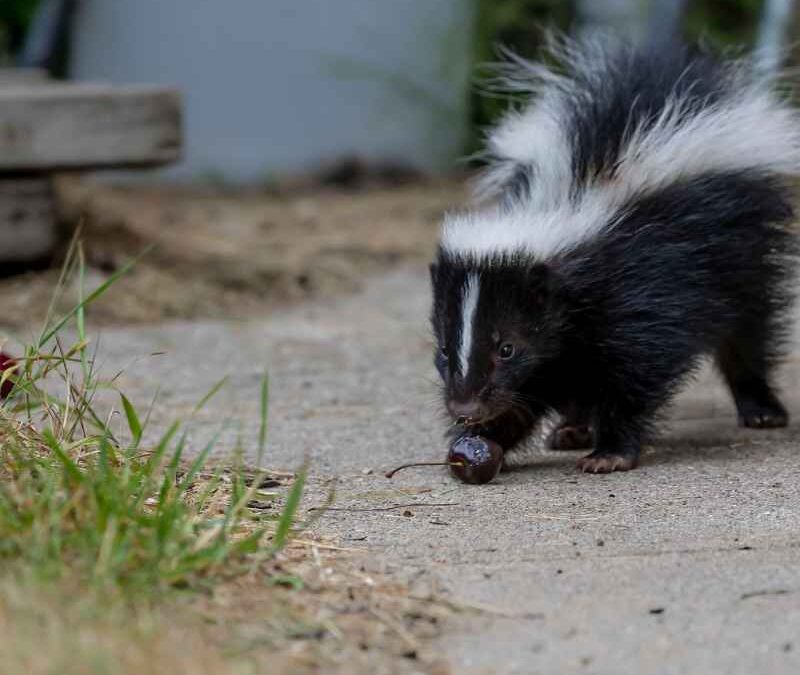
Essential Oils for Skunk Smell: How to Freshen Your Home After a Skunk Encounter
Few household smells are as memorable as skunk spray. Whether a skunk has sprayed near your garage, underneath your porch, or close to an open window, that unmistakable odor can find its way indoors and linger long after the skunk has disappeared.
If you enjoy essential oils, you might be tempted to reach for your diffuser, make a room spray, or add a fresh scent to your laundry. Essential oils can make a home smell more pleasant, but there are a few things to know before using them to deal with skunk odor.
First, an important warning for pet owners: Essential oils can be harmful to animals. Never apply essential oils to your pet to remove skunk smell, and don’t diffuse essential oils around pets. If your pet has been sprayed by a skunk or exposed to essential oils, contact your veterinarian for guidance.
If you don’t have pets, there are several ways to tackle the odor itself and then freshen your home with essential oils. Let’s look at what can help, what won’t, and how to approach lingering skunk smells.
Essential Oils and Pets: Read This First
I enjoy essential oils, but enjoying them responsibly means understanding that animals can react differently to them than people do.
Essential oils can enter an animal’s body through ingestion, skin contact, and inhalation. Cats are particularly vulnerable to certain essential oils, and birds are especially sensitive to airborne pollutants and fragrances. Active diffusers can release tiny oil droplets that may settle on an animal’s fur or feathers and later be ingested during grooming.
For that reason, don’t diffuse essential oils around pets or apply them directly to an animal. I also recommend avoiding essential-oil sprays and fragranced products in areas where pets spend time.
If your dog or cat has been sprayed by a skunk, ask your veterinarian how to handle the situation safely rather than trying an essential-oil remedy. If essential oils get on your pet or your pet may have ingested them, contact your veterinarian promptly. Seek urgent veterinary advice if your pet develops symptoms or the oil gets into its eyes or mouth.
You can read more in the Merck Veterinary Manual’s guidance on essential-oil toxicity in animals.
The essential-oil suggestions below are intended for pet-free homes. If you share your home with animals, choose fragrance-free odor-control options instead.
First, Remove the Source of the Skunk Smell
Before reaching for a diffuser or room spray, try to figure out where the odor is coming from.
A skunk may have sprayed a garage door, porch, trash cans, outdoor furniture, or another surface near your home. Sometimes the smell travels indoors through open windows or doors. In other cases, contaminated clothing or other materials may be carrying the odor inside.
Skunk spray contains sulfur-containing compounds that can cling to surfaces and materials. Simply adding a stronger fragrance may cover the smell temporarily without addressing its source.
Here are a few practical first steps.
Ventilate the area
Open windows and doors when appropriate to allow fresh air to circulate. If the odor is in a garage, opening the garage door may help ventilate the space. Use fans to move air outdoors when practical, rather than directing contaminated air farther into your home.
Clean affected surfaces
Use a cleaner or odor-removal product appropriate for the affected material. Always test products on an inconspicuous area first, especially on painted surfaces, wood, upholstery, and other materials that may discolor.
Avoid mixing cleaning products, and follow the product label carefully.
Wash affected fabrics
Wash washable clothing and other suitable fabrics according to their care labels. Use an appropriate laundry detergent, and consider adding baking soda to the wash if the fabric and washing instructions allow it.
Penn State Extension suggests adding half a cup of baking soda to the wash when laundering clothing affected by skunk odor. If the smell remains, another wash may be necessary.
You can find additional guidance in Penn State Extension’s article on skunks and odor removal.
Can Baking Soda Help With Lingering Skunk Odor?
Baking soda is an inexpensive household staple that may help with some lingering odors.
For a simple option, place a small bowl of plain baking soda in the affected room, somewhere it won’t be disturbed. Keep it well out of reach of children and pets.
Replace it as needed, and remember that results will depend on the source and severity of the smell.
Baking soda isn’t a guaranteed skunk-odor remover. If the spray has contaminated a surface or soaked into a porous material, cleaning the source is still the priority.
I would also keep the baking soda plain rather than adding essential oils. Adding fragrance doesn’t necessarily improve its odor-control performance.
Essential Oils for a Fresher-Smelling Home
Once you’ve addressed the source of the skunk odor and allowed the area to ventilate, you may want to add a pleasant fragrance to your home.
Essential oils can provide a lovely scent, but they shouldn’t be described as air purifiers or as proven treatments for skunk spray. These blends are for fragrance, not for neutralizing the compounds responsible for the odor.
If you live in a pet-free home and enjoy using an essential-oil diffuser, here are two simple combinations to try.
1. Fresh Citrus and Lavender
This is a bright, fresh-smelling blend with a soft floral note.
You’ll need:
Add the oils to your diffuser according to the manufacturer’s instructions, including the recommended water level and run time.
The lemon gives the blend a fresh citrus character, while lavender softens the aroma. It’s a simple combination for freshening a room after you’ve dealt with the underlying smell.
2. Fresh and Woodsy
If you prefer a less floral fragrance, try this combination.
You’ll need:
Add the oils to your diffuser according to its instructions.
This blend has a softer, woodsy character. As with the first blend, use it only in a pet-free environment and only after addressing the source of the odor.
Neither blend has been established as an effective way to remove skunk smell. Think of them as a finishing touch rather than the solution itself.
What About DIY Essential-Oil Room Spray?
A room spray is another way to add fragrance without running a diffuser.
However, essential oils don’t dissolve evenly in plain water. Simply adding essential oils to a spray bottle filled with water can leave concentrated droplets that may contact skin or surfaces.
If you want to make your own room spray, use a formulation designed for essential oils and follow the appropriate instructions for dilution, solubilization, and use. Test the finished product on an inconspicuous surface, and avoid spraying it toward your face.
Use a room spray only after cleaning up the source of the skunk smell. A pleasant fragrance may make the room more inviting, but it won’t necessarily eliminate the underlying odor.
If you enjoy making your own home fragrances, check out my guide to DIY Essential Oil Room Spray.
Pet owners: Skip essential-oil room sprays in areas where pets live or spend time. Choose fragrance-free alternatives instead.
Can You Add Essential Oils to Laundry to Freshen Things Up?
If you make your own laundry soap, you may already enjoy adding essential oils for fragrance. Citrus, lavender, eucalyptus, and other fresh-smelling oils can add a pleasant scent to a laundry routine.
I also have a separate guide to essential-oil blends for laundry soap and dryer balls, with ideas for people who enjoy experimenting with fragrance in their laundry routine.
When dealing with skunk odor, though, start by washing affected items with a suitable detergent and following the fabric’s care instructions. Baking soda may be another option for washable clothing, as discussed above.
Essential oils can add fragrance, but don’t rely on them to remove the compounds responsible for skunk smell. Oils also don’t dissolve evenly in water, so how they’re incorporated into a laundry product matters. Follow your product and machine instructions, and avoid adding oils in ways that could leave residue or affect fabrics.
Keep essential oils away from pet bedding and fabrics your animals regularly touch or sleep on. If you have pets, ask your veterinarian about the risks of using fragranced laundry products around them.
Can an Air Purifier Help With Lingering Skunk Odor?
An air purifier may be worth considering if you’ve cleaned the affected area but still notice an unpleasant smell indoors.
Not all air purifiers do the same job, though.
A HEPA filter is designed primarily to capture airborne particles. For certain gases and odors, an air purifier also needs an appropriate gas-phase filter, such as one containing activated carbon. The amount and quality of the carbon can affect how well a unit removes odors.
An air purifier may help reduce some airborne odors, but it won’t clean skunk residue off surfaces or reliably solve a strong odor coming from contaminated materials.
If you’re shopping for one, look for:
- A filter designed to address odors or gases, not just particles.
- Clear information about filter replacement and activated-carbon content.
- A unit appropriately sized for the room.
- No ozone-generating function marketed as an odor-removal solution.
- My air purifier pick WINIX 5510 Air Purifier
For more information, see the U.S. Environmental Protection Agency’s guide to air cleaners and air filters in the home.
An air purifier with a suitable activated-carbon filter can be a useful tool for some indoor-air concerns, but I wouldn’t promise that a particular model will eliminate skunk odor. Start by removing the source, and consider a purifier as a possible additional step.
The Bottom Line: Deal With the Odor First
Skunk smell can be stubborn, but adding more fragrance isn’t necessarily the answer.
Start by ventilating the area, identifying the source, and cleaning affected surfaces or washing contaminated fabrics appropriately. Plain baking soda may be worth trying for some lingering room odors, and an air purifier with an appropriate activated-carbon filter may help with certain airborne odors.
If you live in a pet-free home and enjoy essential oils, a simple citrus-and-lavender blend or a fresh, woodsy combination can provide a pleasant fragrance after you’ve addressed the problem.
If you have pets, take the conservative approach: don’t diffuse essential oils around them, don’t apply oils to their bodies, and avoid essential-oil sprays in their living areas. If your pet has been sprayed by a skunk or exposed to essential oils, call your veterinarian for advice.
The goal is to remove the source of the smell first, then choose a freshening method that makes sense for your home. And when it comes to essential oils, a little knowledge goes a long way toward enjoying them responsibly.
The information provided here is intended for educational purposes only and is not a substitute for professional medical advice, diagnosis, or treatment. Essential oils are potent natural compounds that can offer various benefits when used appropriately.
Some of the links on this website are affiliate links, which means that we may earn a commission if you click on the link or make a purchase using the link. When you make a purchase, the price you pay will be the same whether you use the affiliate link or go directly to the vendor’s website using a non-affiliate link. By using the affiliate links, you are helping support our website, and we genuinely appreciate your support.
